
Digital platforms, marketplaces, and complex products

Platform product design for digital platforms and marketplaces

Platform product design shapes the roles, interactions, rules, workflows, and interfaces that let people create value together. This page is about software platforms—not industrial product families.

Need a marketing website for your platform? Explore our Ploy website design and development service.

ParticipantProvider
ParticipantCustomer
Core interactionValue exchanged
Platform roleOperator

Direct answer

What is platform product design?

Platform product design is the practice of designing a digital service that facilitates interactions between distinct but interdependent participant groups. It defines who takes part, what value they exchange, which rules shape the interaction, how trust is established, and how the whole service improves over time—not only how individual screens look.

The OECD’s 13 May 2019 report emphasizes that platforms support many kinds of interaction and cannot be reduced to one sector or one success model. Product design therefore starts with the participant system and value exchange, then works inward toward journeys, interfaces, and components.

Decision table 01

How is a platform different from a single-user product?

Design questionSingle-user or linear productDigital platform or marketplace
Who creates value?The product team serves one main user group.Several participant groups create, exchange, verify, or govern value together.
What organizes the experience?One primary task or funnel can often lead.Role-specific journeys meet at one or more core interactions.
Where does trust live?Mostly between the user and the product.Between participants and between every participant and the platform.
What must be governed?Access, content, and product rules.Eligibility, permissions, quality, moderation, disputes, exceptions, and incentives.
What does success mean?Adoption, completion, conversion, and retention.Healthy participation, successful interactions, quality, and sustainable operations.
How does the UI scale?Shared patterns can follow one dominant workflow.Shared patterns stay consistent without flattening legitimate role differences.

A marketplace is one type of platform. The UK Office for Product Safety and Standards described online marketplaces on 24 March 2025 as digital platforms where third-party sellers offer goods or services and the marketplace facilitates the transaction. Other platforms may connect employers and workers, teams and partners, learners and experts, or software producers and developers.

Platform system

Eight connected decisions in platform product design

The design object is not one screen or one journey. It is a governed system of participants, exchanges, rules, interfaces, operations, and feedback.
  1. 01

    Map every participant role

    Name the people and teams who participate directly or keep the service working: customers, providers, partners, operators, support teams, reviewers, administrators, and regulators where relevant. For each role, clarify goals, permissions, information needs, risks, dependencies, and the point at which they receive value.

    A role map prevents a common failure: improving the visible customer journey while hiding provider or operator friction elsewhere in the system.

  2. 02

    Define the core interaction

    Describe the smallest repeatable interaction that creates value. Who initiates it? What is offered or requested? What information must be present? What confirms a successful match, exchange, decision, or completion?

    If the core interaction is vague, the interface often compensates with more screens rather than more clarity.

  3. 03

    Design trust into the journey

    Trust is the cumulative result of understandable identities, clear expectations, relevant evidence, safe defaults, transparent status, accessible support, and fair recovery when something goes wrong.

    Identify what each participant needs to believe before acting—and what evidence the product can honestly provide.

    The 2025 UK marketplace research links trust to seller legitimacy, platform policies, support, and the marketplace’s role in handling problems.

  4. 04

    Turn governance into product behavior

    Governance defines who may participate, what they may do, how quality is assessed, how exceptions are handled, and what happens when interests conflict. These rules appear in permissions, moderation tools, review systems, warnings, appeals, queues, and operator interfaces.

    Good governance guides behavior without blocking legitimate participation.

    See GOV.UK’s agile governance guidance, published 22 February 2016.

  5. 05

    Connect frontstage and operational workflows

    Map participant actions, platform responses, operator decisions, external systems, offline steps, and exception paths. This reveals where an apparently simple action depends on identity checks, payment states, supply availability, policy, hardware, or support.

    A service blueprint, flow system, technical specification, or prototype should make dependencies explicit enough for product, design, engineering, and operations to share one model.

  6. 06

    Measure system health

    Choose a small set of measures that answer whether the platform is working for people. Useful categories include successful interaction, time to value, completion by role, quality or trust signals, repeat participation, unresolved exceptions, and operational effort.

    Establish a baseline and combine analytics with feedback and research rather than copying a generic marketplace dashboard.

    See GOV.UK’s performance-metrics guidance from 5 December 2017.

  7. 07

    Run continuous, multi-role discovery

    Platform discovery needs evidence from more than the easiest participant group to recruit. A change that improves buyer conversion can increase provider workload, support demand, risk, or low-quality participation.

    Put concepts and working software in front of real users, observe behavior, review performance data, and iterate from what the team learns.

    See the GOV.UK service standard published 8 May 2019 and updated 30 May 2022.

  8. 08

    Build a role-aware design system

    Shared principles, tokens, components, patterns, content guidance, accessibility expectations, and contribution rules reduce avoidable relearning. Consistency should preserve the differences that make each role effective.

    Governance should explain when a role-specific pattern extends the system rather than bypassing it.

    The U.S. Web Design System maturity model treats principles and guidance as part of maturity—not only code—and its design principles connect trust, accessibility, continuity, listening, and improvement.

Verified first-hand work

Platform decisions made visible

These examples use only public project scope and methods. They do not claim confidential outcomes or unsupported client metrics.
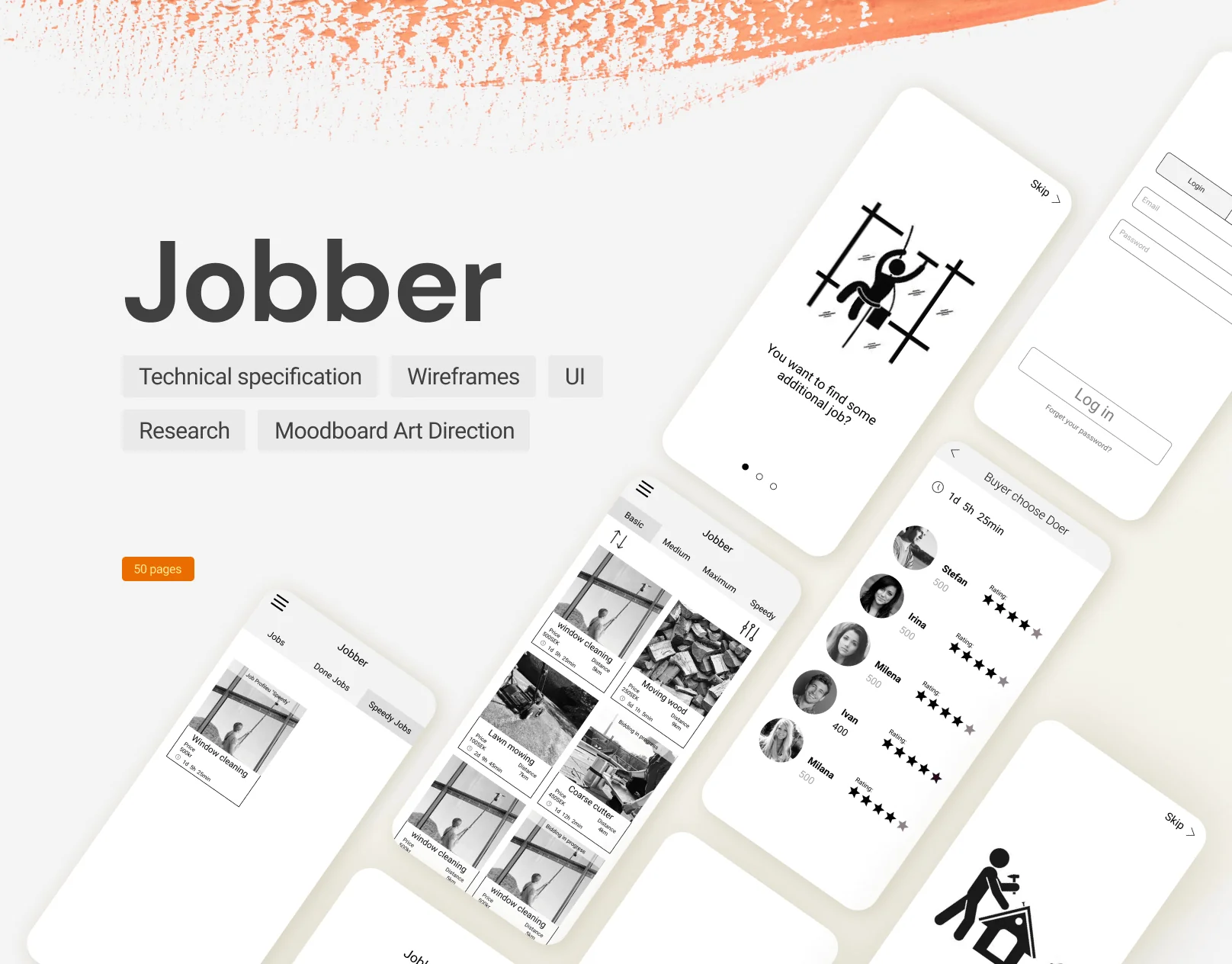
Jobber jobs marketplace screens for browsing jobs, choosing providers, and managing bookings.

Roles · specifications · flows

Specifying a multi-role jobs marketplace

The public Jobs Marketplace Platform technical specification describes a labor marketplace connecting people who want work with people who need workers. The engagement included assessment, analysis, technical and UX specifications, annotated wireframes, interaction design, user flows, prototyping, and UX research.

The useful lesson is the sequence: when a product has many roles, first make the architecture and decisions explicit enough to guide later design and programming.
Access · identity · payment

Connecting systems and reusable UI

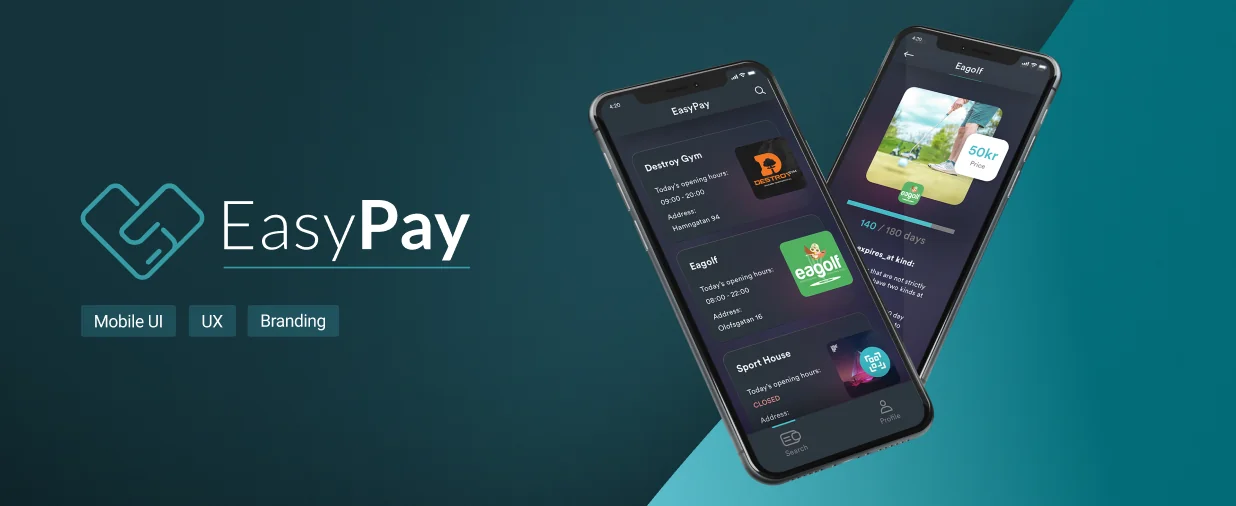
The public Payment and Access Mobile App case study describes a product spanning recurring access, payment, identity confirmation, door hardware, and a white-label application. The work began with user-flow diagrams and continued through wireframes and a prototype.

It shows why complex product design connects the visible mobile journey to external systems and operational conditions—and why reusable UI needs controlled variation rather than one fixed surface.

EasyPay mobile app screens for browsing services and making payments.

Working sequence

A practical platform design sequence

Small changes are valuable when they improve the interaction without shifting hidden costs or risks to someone else.
  1. 1

    Frame the system

    Define the product boundary, participant groups, core interaction, risks, and desired outcomes.

  2. 2

    Gather evidence

    Review research, analytics, support themes, operational constraints, current workflows, and known exceptions.

  3. 3

    Model roles and flows

    Map permissions, states, handoffs, dependencies, trust needs, governance rules, and failure recovery.

  4. 4

    Prioritize decisions

    Separate assumptions requiring research from workflow questions requiring specification and interface questions requiring prototyping.

  5. 5

    Prototype the riskiest interaction

    Test where misunderstanding, trust, coordination, or operational complexity can break the system.

  6. 6

    Build reusable patterns

    Add proven solutions to the design system with accessibility, content, state, and contribution guidance.

  7. 7

    Measure and improve

    Compare outcomes with the baseline, listen across roles, review unintended effects, and make the next evidence-led change.

Measure the system

Is the platform working for people?

Use a baseline, several evidence sources, and a small set of measures that reflect the core interaction. GOV.UK’s 5 December 2017 guidance recommends meaningful KPIs with context and continuous measurement rather than isolated snapshots.

  • Successful interaction
  • Time to value
  • Completion by role
  • Quality and trust
  • Repeat participation
  • Unresolved exceptions
  • Operational effort

Direct answers

Platform product design FAQs

Is platform product design the same as industrial product-platform design?

No. Here, platform product design means designing digital platforms, marketplaces, and complex software that facilitate interactions between participant groups. Industrial product-platform design usually concerns shared architectures across a family of physical products.

What is the difference between platform UX and marketplace UX?

Platform UX is the broader practice of designing interactions among multiple roles within a digital service. Marketplace UX is a subset focused on exchanges between buyers and sellers, customers and providers, or other supply-and-demand participants.

Why do operator and admin tools matter?

They are part of the service. Operators may verify participants, resolve exceptions, moderate content, support transactions, manage quality, or enforce policy. Weak internal tools often reappear as delays, inconsistency, or poor recovery for customers.

Which metrics should a platform team track?

Track measures tied to the core interaction and participant outcomes: successful completion, time to value, quality, repeat participation, trust or safety signals, unresolved exceptions, and operational effort. Use a baseline and avoid one metric that hides harm elsewhere.

Does every role need a separate interface?

Not necessarily. Start with shared tasks and mental models, then separate experiences only where goals, permissions, information, or risk meaningfully differ. A role-aware design system can support both continuity and specialization.

When should a platform create a design system?

Begin once repeated patterns and decisions create enough coordination cost to justify shared guidance. Start with principles, tokens, core components, and the highest-risk patterns; add governance and role-specific extensions as evidence accumulates.

How do you improve a live platform without a full redesign?

Diagnose one high-value interaction, establish a baseline, study the roles and dependencies involved, test a bounded change, and monitor intended and unintended effects. A focused UX audit or discovery engagement may be more useful than replacing the whole interface.

Next decision

Design the interaction, not only the interface

Kings Landing helps teams research, specify, design, prototype, and improve digital platforms and complex products. Start with the decision your team needs to make next.

↑