
AI product builders for founders and companies
AI product development services for founders and companies
We build working web apps and MVPs, connect AI to your workflows, and handle deployment and ongoing support. Our toolkit includes Lovable, Webflow, Claude, and Ploy.
Your idea. A working product.
We build digital products for founders launching an MVP and companies adding AI to existing workflows. Our work covers the application, its integrations, deployment, and support after launch.
Use our human-controlled AI workflow design guide to understand the review, correction, and failure states we account for in an AI product.
For the website around your product, explore our Ploy agency services.
AI integrations and workflows
AI connected to product workflows, with human review and correction

Launch and ongoing support
Deployment, maintenance, and support after the first release
AI product development services
Kings Landing builds working web apps and MVPs, implements AI integrations, and handles deployment and ongoing support. Product research and prototypes guide the build.


Web app and MVP development
Build a working application around the agreed product scope, user roles, and core journeys. Prototypes help test decisions before they become part of the build.

AI integration services and connected workflows
Add AI to an existing product or business workflow. Agree the task, data inputs, system access, and acceptance checks before building the connection. Human review, correction, permissions, and failure handling are part of the agreed scope.
Deployment, maintenance, and support
Deploy the product and support it after launch. Agree the maintenance needs, fixes, and next improvements as part of the project scope.


Build AI people can control
We build AI assistance into product workflows with visible review and correction. People can inspect a proposed result, check its source, and decide what becomes part of the record.
Scope the product. Build it. Launch it.
One team handles the build, integrations, deployment, and ongoing support for your digital AI product.
Define the first working release
Define the first working release or the AI task you want to add to an existing product. Identify the data it needs, the systems it must connect to, and the people who review its results. Agree the permissions and acceptance checks before building.
- The task, users, and first-release scope
- Data sources, system access, and integration requirements
- Approval boundaries and acceptance checks
Build a working digital AI product
Build the application or integration around the agreed workflow. Test what happens when an AI result needs correction, access is denied, or a connection fails, as well as the core user journey. We work with Lovable, Webflow, Claude, and Ploy according to the product and agreed scope.
- Working applications and connected AI tasks
- Human review, correction, and permission checks
- Failure handling and first-release acceptance tests
Deploy, maintain, and support
Deploy the agreed application or integration and support it after launch. Agree deployment access, handover needs, and support responsibilities before release. Maintenance, fixes, and further changes depend on the project scope; hosting and external service charges need to be accounted for separately.
- Deployment access and launch responsibilities
- Handover needs and ongoing support scope
- Maintenance, external service costs, and further changes
AI drafts. People confirm the record.
Kings Landing designed BauBau’s construction diary so AI prepares a draft, while people review, correct, and confirm each record. The workflow keeps evidence, permissions, and approvals connected.
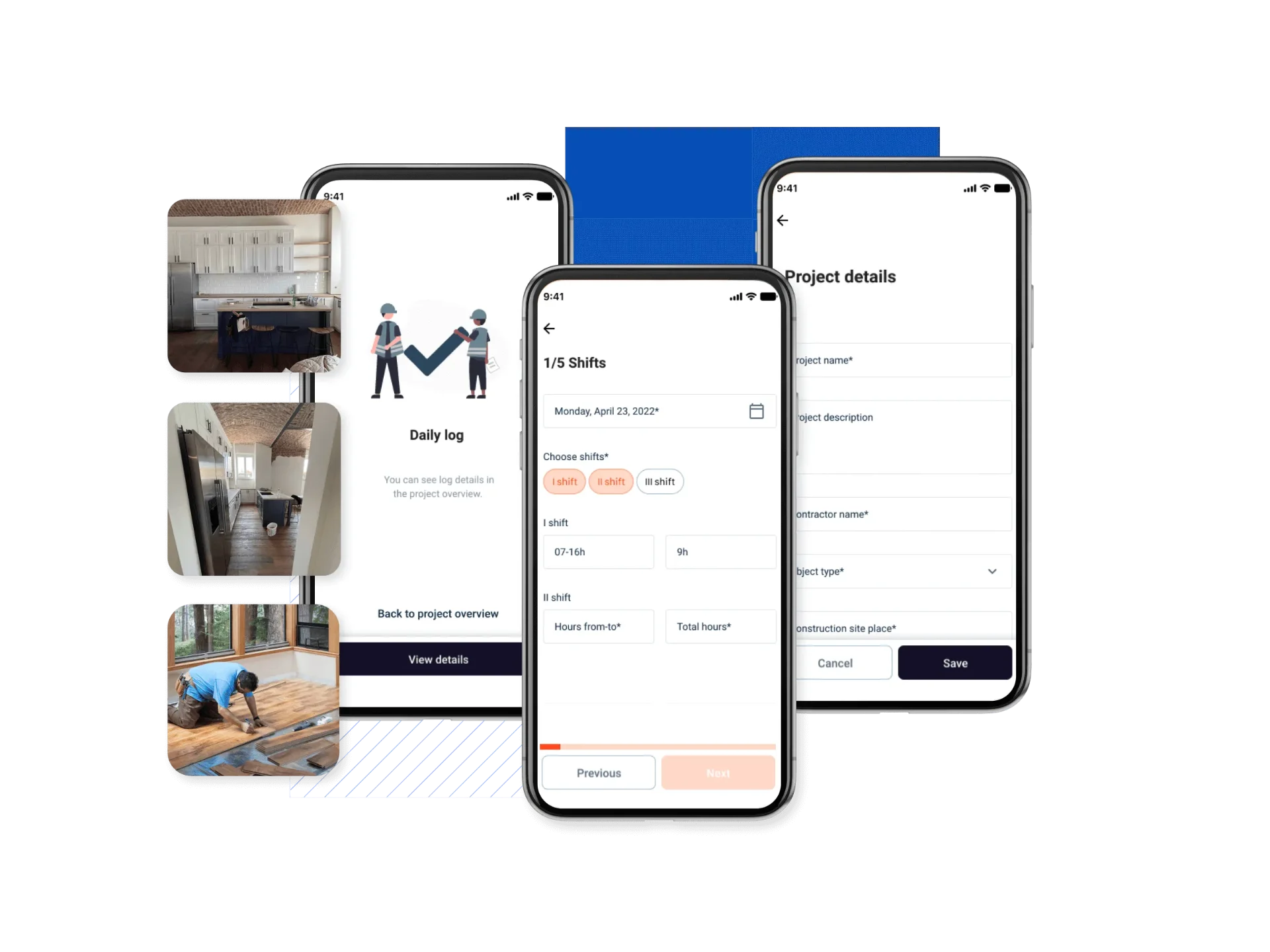
Roles, permissions, project and entry lifecycles, review policy, reporting, retention, and audit requirements.
Responsive daily-entry flows with photos, offline drafts, upload states, retries, and conflict handling.
AI prepares structured drafts and helps inspect confirmed records. People review, correct, approve, and retain control.
Questions about your build
What digital AI products does Kings Landing build?
Kings Landing builds working web apps and MVPs for founders and companies. Our services include AI integrations and connected workflows, deployment and launch, and ongoing maintenance and support. Research, design, and prototypes support the build rather than being the final deliverable.
Can you connect AI to an existing product or workflow?
Yes. Our AI integration services connect AI to an existing digital product or business workflow. We start with a defined task, its data inputs, the systems it needs to access, and the people responsible for review. The project scope sets what the integration can read, change, or send, and which actions require human approval.
What do you need to scope an AI integration project?
Bring a description of the task, the current workflow, the software involved, and an example of the result you need. Identify who can authorize access to the required data and systems, who will review AI results, and which actions must stay manual. Those inputs help define the build scope, integration requirements, and acceptance checks. Agree data handling and access arrangements before sharing production information.
What does an AI integration project include?
The agreed scope can cover the connection to the required data and systems, the AI-assisted workflow, human review and correction, permission checks, and failure handling. Define how the finished integration will be tested and deployed, along with its handover and support needs. The scope depends on the existing software, available access, and the task; it is not a promise to connect every tool or automate every decision.
What happens when an AI result is wrong or a connection fails?
Review and correction are part of the workflow, not an assumption that every AI result is correct. People need to see the proposed result and decide whether to accept or change it. We agree failure handling for the integration, including what happens when required data is unavailable, access is denied, or a connected service fails. The appropriate retry or manual path depends on the task and the consequences of an incorrect action.
What affects the cost of AI integration services?
Cost depends on the task, the state of the existing software, data access, the connections required, and the review and testing needs. Deployment, ongoing support, hosting, and external AI or software usage also need to be accounted for. A defined scope is needed before estimating delivery cost; there is no single price that applies to every integration.
Do you handle deployment and support after launch?
Yes. Kings Landing's services include deployment and launch, followed by ongoing maintenance and support. We agree the support scope, maintenance needs, and further product improvements with you as part of the project.
Which tools do you work with?
We work with Lovable, Webflow, Claude, and Ploy. The tools and integrations used for a build depend on the product and the agreed scope.
How does Kings Landing keep people in control of AI?
We build AI assistance with human review and correction in the workflow. People can inspect a proposed result, check its source, and decide what becomes part of the record. Our BauBau Construction Diary design work shows this approach through AI drafts, human confirmation, permissions, and connected evidence.